Breakthrough

Closing the Gap between Knowledge and Cure

Children and young adults with cerebral palsy face mortality rates up to ten times higher than their peers. The majority live in low- and middle-income countries, where access to diagnosis, intervention, and medical care is limited.

Through the Breakthrough Program, CPF is engaging in a long-term capital strategy through philanthropy, strategic partnerships, and co-investment with industry and public stakeholders.

The Vision: Multiple Breakthroughs

Cerebral palsy is not one disorder. It is a spectrum of early brain injuries and motor circuit disorders including:

  • Genetic and metabolic motor disorders
  • Prematurity-related white matter damage
  • Neonatal stroke
  • Inflammatory brain injury
  • Hypoxic-ischemic injury

Each disrupts motor pathways differently. Each requires a targeted biological solution.

For some, this means preventing severe impairment before it takes hold. For others, it will mean repairing damaged neural circuits. For adults, it will mean restoring motor function long thought irreversible.

Leadership

areas of emphasis

  • Cell-Based Interventions

  • Computational Modeling and Brain Computer Interface

  • Immunology and Neuroinflammation

  • Pharmacology and Neurotherapeutics

  • Precision Medicine

  • Pre-Clinical Modeling

Cell-Based Interventions

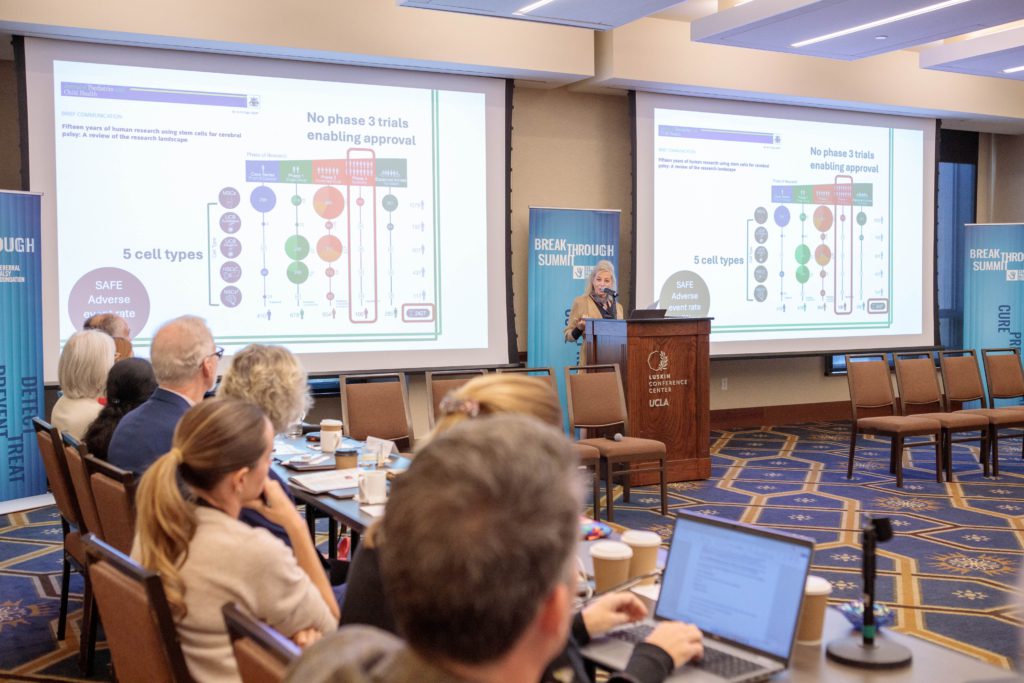
Cell-Based Interventions for cerebral palsy are showing promising early results, particularly with umbilical cord blood therapies that have demonstrated improvements in gross motor function in young children, though most evidence remains from early-phase trials. Ongoing research is advancing stem cell, biomaterial, and imaging approaches to support brain repair, while significant challenges remain in translating these therapies into clinical practice due to safety considerations, cost, and the need for large Phase III trials.

Members:

  • Evan Snyder, MD, PhD, Professor and Director, Center for Stem Cells and Regenerative Medicine Sanford Burnham Pebys Medical Discovery and University of California, San Diego
  • Michael Fehlings, MD, PhD, Professor of Neurosurgery, University of Toronto
  • Rod Hunt, MD, PhD, Chair of Neonatal Paediatrics, Monash University
  • Suzie Miller, PhD, Director of the Ritchie Center, Monash University
  • Mike Modo, PhD, MSc, Professor, University of Pittsburgh
  • Iona Novak, AM, OT, PhD, Professor, Cerebral Palsy Alliance Research Institute, University of Sydney
  • Aijun Wang, PhD, Chancellor’s Fellow and Professor of Surgery and Biomedical Engineering, University of California, Davis

Computational Modeling and Brain Computer Interface

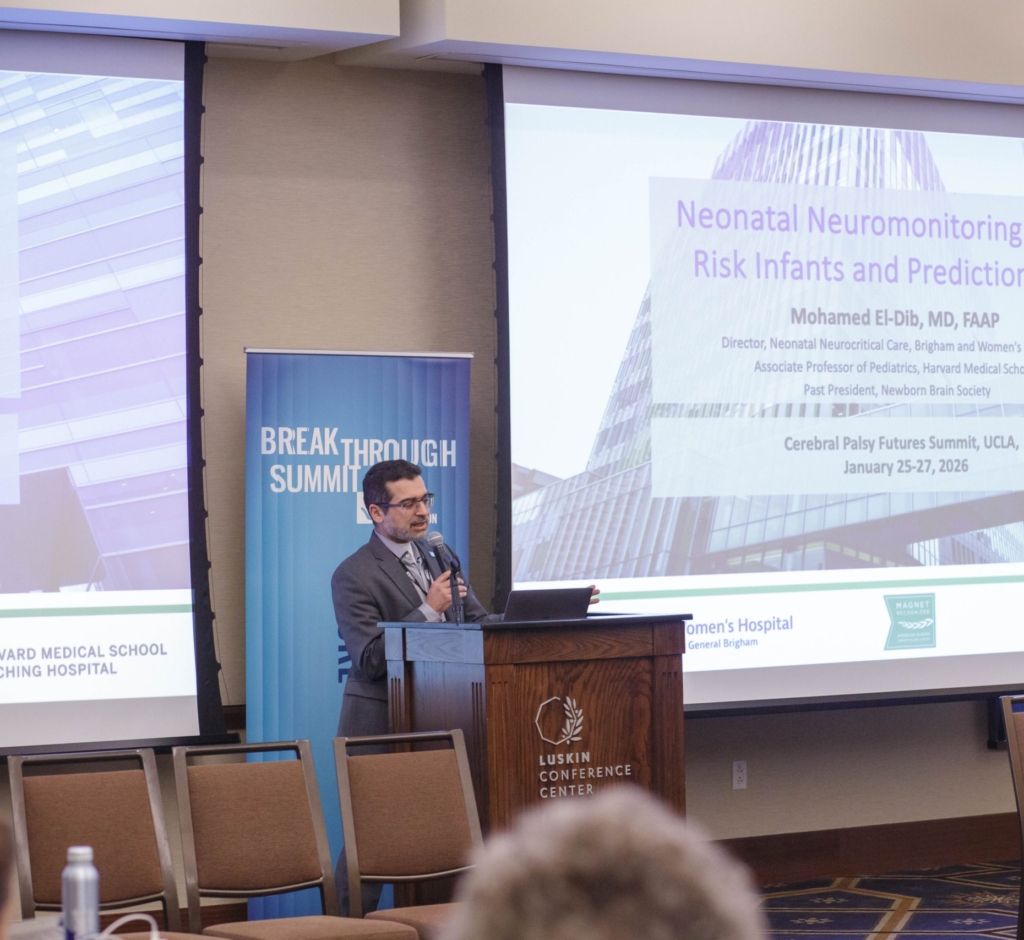
Engineering and data science are playing an expanding role in cerebral palsy research, from technologies that support musculoskeletal rehabilitation and brain monitoring in high-risk infants to brain–computer interfaces that enable communication and device control for individuals with severe motor impairments. Advances in data analysis and privacy-preserving data sharing are also helping researchers identify new CP subtypes and generate insights from large clinical datasets to guide more personalized care.

Members:

  • Adam Kirton, Professor of Pediatrics and Clinical Neurosciences, University of Calgary
  • Bruce Aronow, PhD, Cincinnati Children’s Hospital Medical Center
  • Hank Chambers, MD, Emeritus Professor of Clinical Orthopedic Surgery, Rady’s Children’s Hospital, University of California, San Diego
  • Mohamed El-Dib, MD, Director of Neonatal Neurocritical Care, Mass General Brigham for Children, Harvard Medical School
  • Nathalie Maitre, MD, PhD, Director of Research in Early Development and Cerebral Palsy, Emory University
  • Bryan Snyder, MD, PhD, Maurice Mueller Professor of Orthopedic Surgery, Boston Children’s Hospital, Harvard Medical School
  • Mark Walinske, Executive Director, KidSights a Gillette Children’s Hospital Company

Immunology and Neuroinflammation

Inflammation is increasingly recognized as a central pathway in cerebral palsy, with evidence suggesting that neuroinflammatory processes can persist for months to decades after the initial brain injury. Emerging research highlights multiple potential therapeutic strategies, including exercise, immunomodulatory agents, and targeted immune cell approaches while emphasizing the need for systems biology and clinical trials to better understand and treat inflammation across the lifespan.

Members:

  • Eleanor Molloy, PhD, MB, Professor and Chair of Paediatrics and Child Health, Trinity College Dublin
  • Huyla Bayir, MD, Professor of Pediatrics, Columbia University
  • Donna Ferriero, MD, Distinguished Professor of Neurology and Pediatrics, University of California, San Francisco
  • Pierre Gressens, MD, PhD, Professor, Inserm, Paris, France
  • Shalaka Hampras, PhD, MPH, Executive Medical Director, Global Clinical Lead, Johnson and Johnson
  • Lauren Jantzie, PhD, Associate Professor of Pediatrics, Johns Hopkins University School of Medicine and the Kennedy Krieger Institute
  • Marcel Nold, MD, Professor of Paediatric Immunology, Monash University

Pharmacology and Neurotherapeutics

Several established and emerging therapies are being explored to prevent cerebral palsy, ranging from proven interventions like magnesium sulfate and therapeutic hypothermia to promising approaches such as caffeine, melatonin, anti-inflammatory compounds, and GLP-1 agonists. Advancing these therapies will require overcoming key challenges, including validating early biomarkers for clinical trials, improving global implementation of proven treatments, and strengthening research infrastructure to support large-scale neonatal studies.

Members:

  • Steven Miller, Professor and Head, Department of Pediatrics, University of British Columbia
  • Nadia Badawi, AM, PhD, Professor and Cerebral Palsy Alliance Foundation Chair of Research, University of Sydney
  • Terrie Inder, MD, Director of the Center for Newborn Medicine, Children’s Hospital of Orange County
  • Suma Jacobs, MD, PhD, Professor and Director of the Semel’s Institute’s Child and Adolescent Psychiatry Division, University of California, Los Angeles
  • Frank Longo, MD, PhD, Professor, Department of Neurology, Stanford University
  • Kanwaljit Singh, MD, MPH, MBA Executive Director, International Neonatal Consortium, Critical Path Institute

Precision Medicine

Advances in genetics are reshaping understanding of cerebral palsy, with about one in four individuals having identifiable genetic variants and substantial overlap between CP-associated genes and those linked to developmental epileptic encephalopathies. Emerging precision health approaches, including gene therapies and circuit-specific research, aim to move genomics beyond diagnosis toward personalized treatments and earlier risk identification while maintaining the clinical utility of the CP diagnosis.

Members:

  • Darcy Fehlings, MD, MSc, Professor of Paediatrics, University of Toronto
  • Andrea Duncan, MD, Professor, University of Pennsylvania and Medical Director of the Neonatal Follow-up Program, Children’s Hospital of Philadelphia
  • Michael Fahey, MD, Professor of Paediatrics, Monash University
  • Josef Gecz, PhD, Professor of Human Genetics, Adelaide University
  • Jeffery Macklis, MD, DSc, Wien Professor of Life Sciences, Harvard University

Pre-Clinical Modeling

Animal and cellular models are critical for advancing understanding of cerebral palsy and developing new therapies, with researchers using systems ranging from brain and muscle organoids to mouse, rabbit, and large-animal models. Integrating insights across these models helps reveal mechanisms of brain and muscle injury, identify therapeutic targets, and translate laboratory discoveries into potential clinical treatments.

Members:

  • Emin Maltepe, MD, PhD, Professor of Pediatrics, Biomedical Sciences, and Developmental and Stem Cell Biology, University of California, San Francisco
  • Sujatha Kannan, MD, Professor of Anesthesiology and Critical Care Medicine, Johns Hopkins School of Medicine
  • Anca Pasca, MD, Assistant Professor of Pediatrics/Neonatology, Stanford University
  • Anna Penn, MD, PhD, L Stanley James Associate Professor and Chief of Neonatology, Columbia University
  • Kristen Reider, PhD PT, Assistant Professor of Orthopaedic Surgery, David Geffen School of Medicine, University of California, Los Angeles
  • David Rowitch, MD, ScD, Professor of Paediatrics, Cambridge University
  • Alison Van Eenennaam, PhD, Professor of Animal Genetics, University of California, Davis

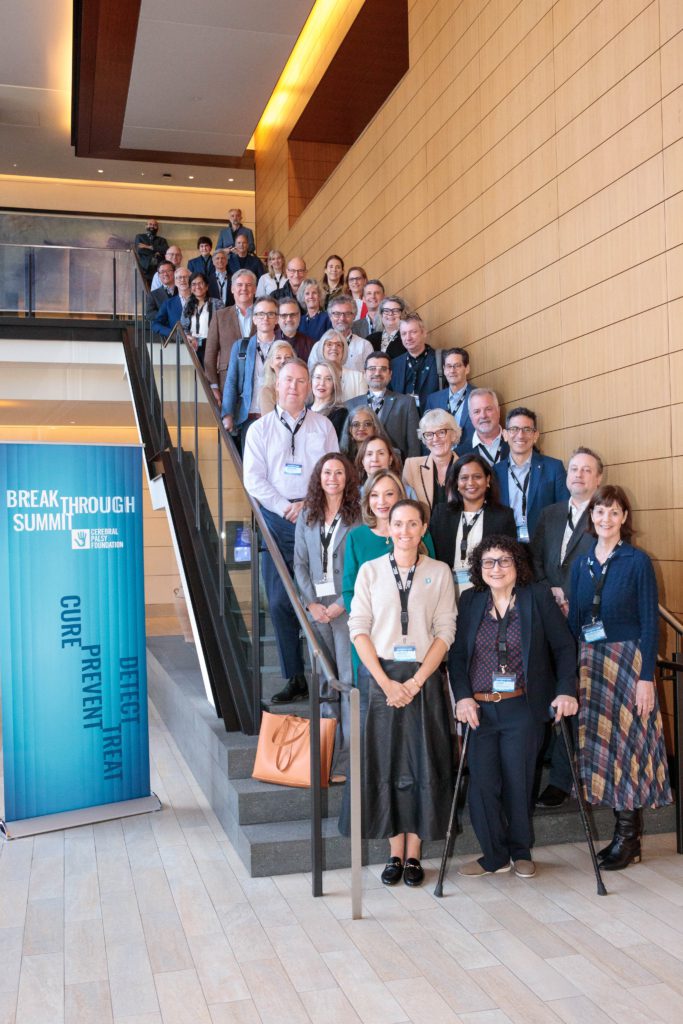
The Summit helped galvanize a shared vision around something the field has long understood but rarely said out loud together: the need is unambiguous, the science is maturing, but getting from promising preclinical data to approved therapies means being as rigorous about the commercial and regulatory realities as we are about the biology.

Emin Maltepte, Professor of Pediatrics, Biomedical Sciences, and
Developmental and Stem Cell Biology, University of
California, San Francisco

Selected publications