
What Comes Next After the CPF Breakthrough Summit?
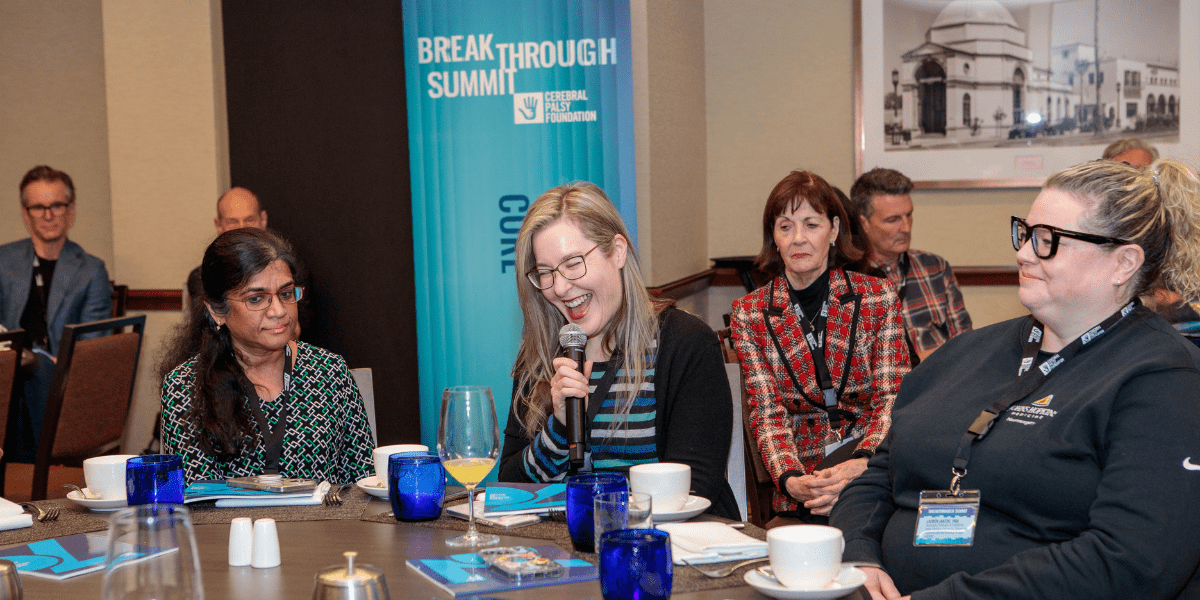
Last month, the Cerebral Palsy Foundation convened the CPF Breakthrough Summit in Los Angeles, bringing together a select group of leading scientists, clinicians, and innovators from around the world, including adults with cerebral palsy, and the parents and siblings of those with cerebral palsy. Over three days of focused discussion, participants gathered with a shared purpose: to accelerate progress in cerebral palsy prevention, detection, and treatment.
The Summit marked an important moment for the Foundation, the cerebral palsy community, and the global research community because we witnessed what is possible when we work together to move our field forward.
Key Scientific Takeaways
Across research presentations and scientific discussions, several key themes emerged:
- Cerebral palsy is not static. Advances in neuroscience continue to show that the brain adapts across the lifespan, opening new possibilities for intervention well beyond early childhood.
- Earlier detection changes outcomes. New tools and approaches make it possible to identify cerebral palsy risk in infancy, creating critical windows for earlier, more effective intervention.
- Treatment and repair are achievable. Breakthroughs in regenerative medicine, neuroprotection, pharmacology, and combination therapies are rapidly advancing.
- Incremental progress is no longer enough. The field must move toward transformational approaches that bridge discovery and delivery.
Sessions spanned genetic discovery, immunology and neuroinflammation, neural repair and cell-based interventions, computational modeling, and brain-computer interfaces. The most powerful moments often happened between sessions — when clinicians spoke with engineers, stem cell biologists connected with neonatologists, and researchers compared perspectives across disciplines.
Turning Insight Into Action
On the final day of the Summit, participants formed six working groups aligned to CPF’s strategic research priorities, each tasked with developing five-year roadmaps for advancing cerebral palsy science and care.
These roadmaps include defined milestones, partnership strategies, funding pathways, and clear translational goals. Together, they represent a coordinated plan to move promising science out of the lab and into the real-world.
As one participant noted, this was not about asking whether progress is possible — but about deciding how quickly and decisively the field is willing to move.
Centering Lived Experience
A defining element of the Summit was the conscious inclusion of lived experience alongside scientific expertise. Sarah Philbin, CPF’s new Director of Translational Science, brought both perspectives to the room — as a scientist and as a person with cerebral palsy:
What stood out most to me was the Summit’s strong focus on turning emerging science into real-world impact. The Summit explored new therapeutic possibilities while also digging into the practical work required to bring them forward including clinical trial design to eventual clinical implementation. Throughout the Summit, conversations stayed grounded in how care and research can better serve people with cerebral palsy across the entire lifespan, from families facing a new diagnosis to adults with cerebral palsy navigating evolving symptoms as they age. Stakeholder voices were centered throughout, helping ensure that next steps reflect what the CP community actually needs.
Sarah’s perspective reminds us of a core principle that guides our work: research must not only advance knowledge, but meaningfully improve lives.
Others in the room with lived experience included summit participants who were both parents of siblings of those with cerebral palsy, as well as CPF Board Chair Ila Eckhoff and CPF Director of Adult Programs Ashley Harris Whaley, who both have cerebral palsy.
What Comes Next
For the more than 50 million people worldwide living with cerebral palsy, the Summit offered a clear sense of possibility — the scientific knowledge exists, powerful tools are emerging, and the momentum to move this work forward is real. In the months ahead, CPF will:
- Support the six working groups as they refine roadmaps and formalize collaborations
- Identify and pursue funding strategies to accelerate high-impact research
- Advance translational pathways that shorten the time between discovery and care
- Publish a forthcoming Perspectives manuscript outlining a shared strategy for the next decade of cerebral palsy research and innovation
Most importantly, CPF remains committed to bringing the cerebral palsy community into this work — listening to lived experiences and ensuring progress reflects the real needs of people with CP and their families, at every stage of life. Want to stay connected with us as we move forward? Sign up for our monthly newsletter.